
Why native plants
Lawn grass feeds almost nothing. Swap some of it for nearly any planting and you've done some good. Swap it for plants that evolved here, alongside the insects and birds that depend on them, and you've done a lot more.
Most insects can only eat certain plants
Plants protect their leaves with chemical defenses, and over a very long time, insects adapt to get past the defenses of particular plants. So most leaf-eating insects are specialists. They can eat the plants they evolved with and very little else, and a plant from another continent usually isn't food to them at all.
That's why a yard full of imported ornamentals can be covered in flowers and still support very little life. It looks lively enough, but not much is eating there, and not much is raising young.
Baby birds run on caterpillars
Most songbirds, even ones that eat seeds as adults, feed their chicks insects, mostly caterpillars. Doug Tallamy, an entomologist at the University of Delaware, found that a single pair of Carolina chickadees needs somewhere between 6,000 and 9,000 caterpillars to raise one brood.
Those caterpillars come from the trees and plants close to the nest. A feeder is nice for the grown birds, but the chicks depend on what's growing nearby.
Milkweed and monarchs
Monarch caterpillars eat milkweed and nothing else, so all the nectar in the world won't help monarchs if there's no milkweed for their young. The same goes for lots of insects. Flowers feed the adults, but they need particular host plants to lay their eggs on.
Two milkweeds do well around here: butterfly weed, which likes a dry, sunny spot, and swamp milkweed, which likes it damp. It's worth knowing which kind of spot you have before you buy.
Native doesn't have to look messy
A native garden can look as tidy as any other. Plant several of the same thing together instead of one of everything, keep the edges clean, and leave a mowed strip along the border. Neighbors can tell it's on purpose, and they're more likely to try one themselves.
Getting started in Cobb County
- Try to have something blooming from early spring until the first frost. Fall is the gap most gardens have, and it's when monarchs and other insects are fueling up to migrate. Asters and goldenrods are easy ways to fill it.
- Choose plants for the spot you actually have. Red clay, a dry slope and a soggy low corner each call for different plants, and working with your conditions is a lot easier than fighting them.
- Leave the stems standing through winter. Some native bees spend the winter inside hollow stems, and birds pick at the seed heads. Cut everything back in the fall and you lose both.
- Don't spray insecticides. The whole point is to feed insects, and drawing them in only to poison them is worse than not planting at all.
- Start small. A bed you can keep up with does more good than a big one that gets away from you.
Growing at our sites
Georgia Piedmont natives in the ground at our gardens, the most widely planted first.
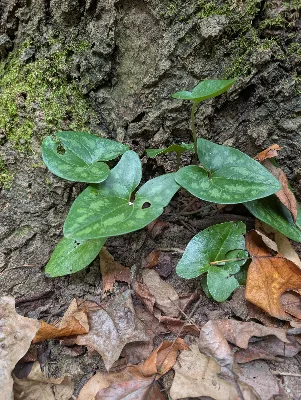 Little Brown JugAsarum arifoliumBlooms Mar–MayAt 3 of our sites
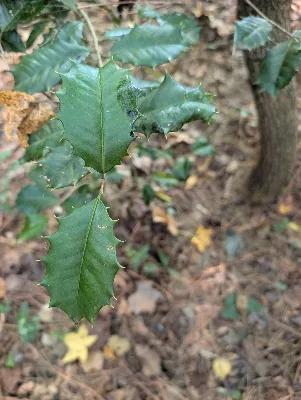 American HollyIlex opacaBlooms Mar–JunAt East Loop and West Loop
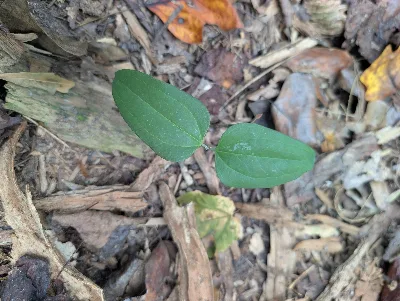 Cat greenbriarSmilax glaucaBlooms May–JulAt East Loop and West Loop
- Christmas fernPolystichum acrostichoidesAt East Loop and West Loop Fork
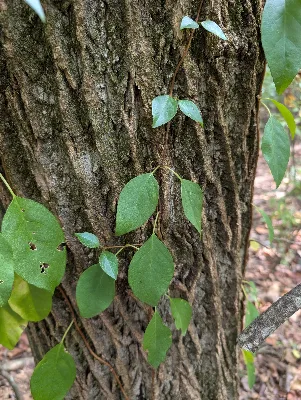 Climbing hydrangeaHydrangea barbaraBlooms May–JulAt East Loop and West Loop Fork
- Cranefly OrchidTipularia discolorBlooms Jul–SepAt West Loop and West Loop Fork
Want to see them up close?
The quickest way to learn these plants is to see them growing. Come out to a workday.