
Jack-in-the-pulpit
Arisaema triphyllum
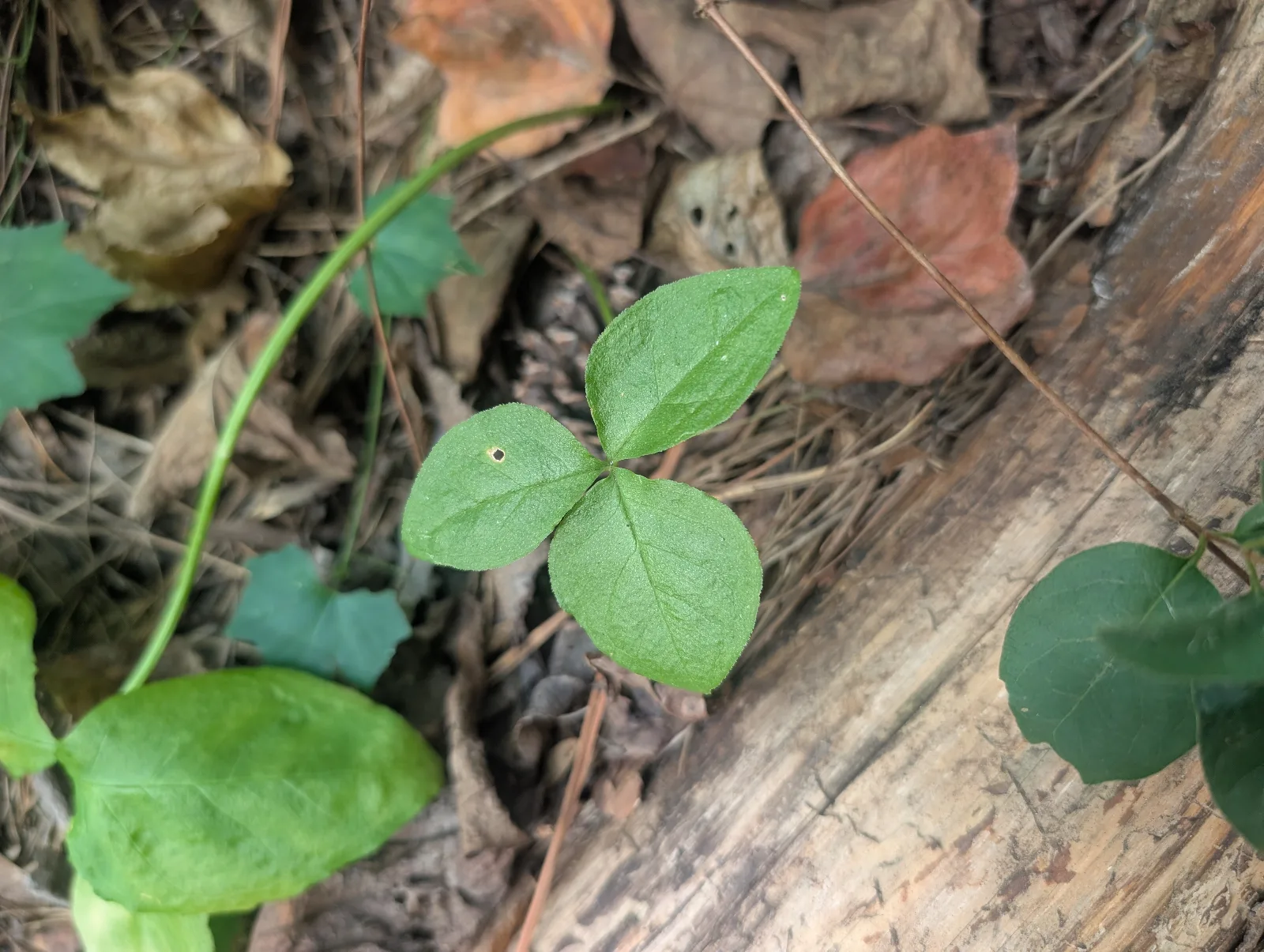
- Blooms
- April to June
- Family
- Araceae
Pollinated by flies and gnats.
Commonly called Jack-in-the-pulpit, this native plant is a spring woodland wildflower, usually growing 1- 2' tall. The spadix or 'Jack' has a columnar form with a sheath that is called a spathe or 'pulpit'.
Flowering plants initially produce only male flowers, but become hermaphroditic as they further age (male flowers on the upper part of spadix and female on the lower part). Most plants in a colony will vanish by mid-summer (become dormant), but the mature, hermaphroditic flowering plant will produce a cluster of red berries in mid to late summer which becomes visible as the spathe withers. Roots contain calcium oxalate (same chemical as in Diffenbachia or dumb cane) and are poisonous.
This unique plant, which is pollinated by flies and gnats, has the ability to change sex. A plant that starts out as male can spontaneously change to female the next year and vice versa. Pollinators crawl beneath the spathe, down the spadix while collecting pollen.
Spreading by cormlets sent out from the main root allow this plant to colonize. It also produces rhizomes.
Jack-in-the-pulpit is best grown in fertile, medium to wet soil in part shade to full shade. It needs constantly moist soil rich in organic matter. It does poorly in heavy clay soils. It may be grown from seed, but takes five years for the plant to flower. This plant is generally found in a forest or natural area in moist woods, along creeks, or in the landscape, as a cultivated herbaceous perennial.
The presence of concentrations of calcium oxalate crystals cause this plant to be toxic to humans when ingested. It also deters wildlife such as deer from consuming the foliage.
(From North Carolina Extension)
Learn more
- Jack-in-the-pulpit on iNaturalist ↗ (opens in a new tab) · photos and range maps
- Jack-in-the-pulpit on USDA PLANTS ↗ (opens in a new tab) · the federal plant profile