
Pink Lady's Slipper
Cypripedium acaule
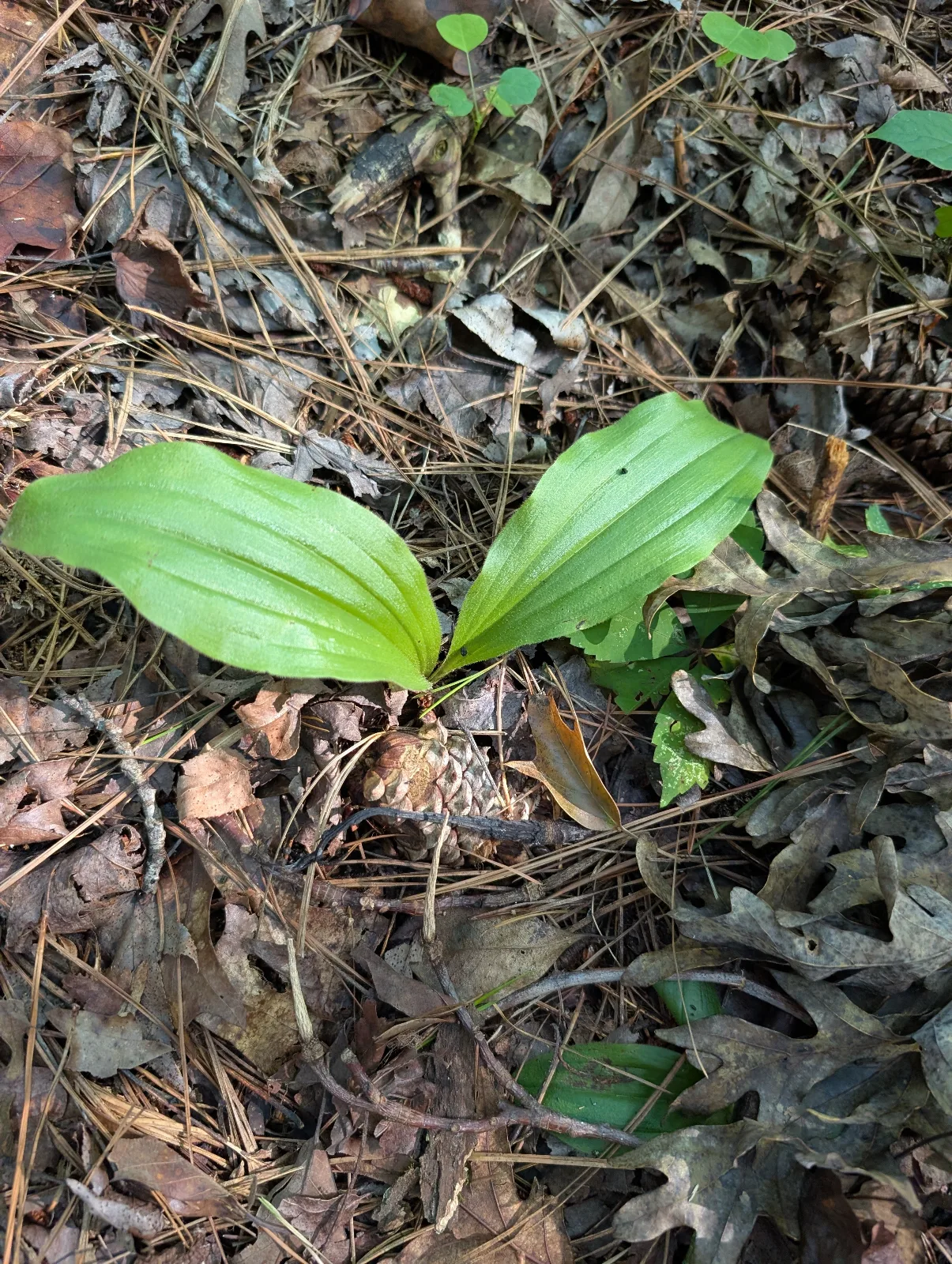
- Blooms
- April to July
- Family
- Orchidaceae
Pink lady's slipper is a large, showy wildflower belonging to the orchid family. It has two opposite basal leaves with conspicuous parallel veins and a large flower at the end of an erect stalk. The flower is magenta to whitish-pink; sometimes the whitish-pink flowers will have darker pink venation. Rarely, the flower may be all white. This plant grows 6 to 15 inches tall and flowers generally between May and July.
In order to survive and reproduce, pink lady's slipper interacts with a fungus in the soil from the Rhizoctonia genus. Pink lady’s slipper takes many years to go from seed to mature plants. Seed-bearing harvest of wild lady's slipper root is not considered sustainable. Pink lady's slippers can live to be twenty years old or more.
Pink lady's slippers also require bees for pollination. Bees are lured into the flower pouch through the front slit, attracted by the flower’s bright color and sweet scent. Once inside, the bees find no reward, and discover that they are trapped, with only one point of escape. Inside the pouch, there are hairs that lead to a pair of exit openings, one beneath each pollen mass. The bee must pass under the stigma, so if it bears any pollen from a visit to another flower, it will be deposited before picking up a fresh load on the way out.
Pink lady’s slipper lives in a variety of habitats, growing in mixed hardwood coniferous forests of pine and hemlock on rocky/mossy slopes, and in semi-open or in deep humus and acidic but well-drained soil under birch and other deciduous trees of eastern United States forests. (From US Forest Service)
Where to see it
Learn more
- Pink Lady's Slipper on iNaturalist ↗ (opens in a new tab) · photos and range maps
- Pink Lady's Slipper on USDA PLANTS ↗ (opens in a new tab) · the federal plant profile