
Muscadine
Vitis rotundifolia
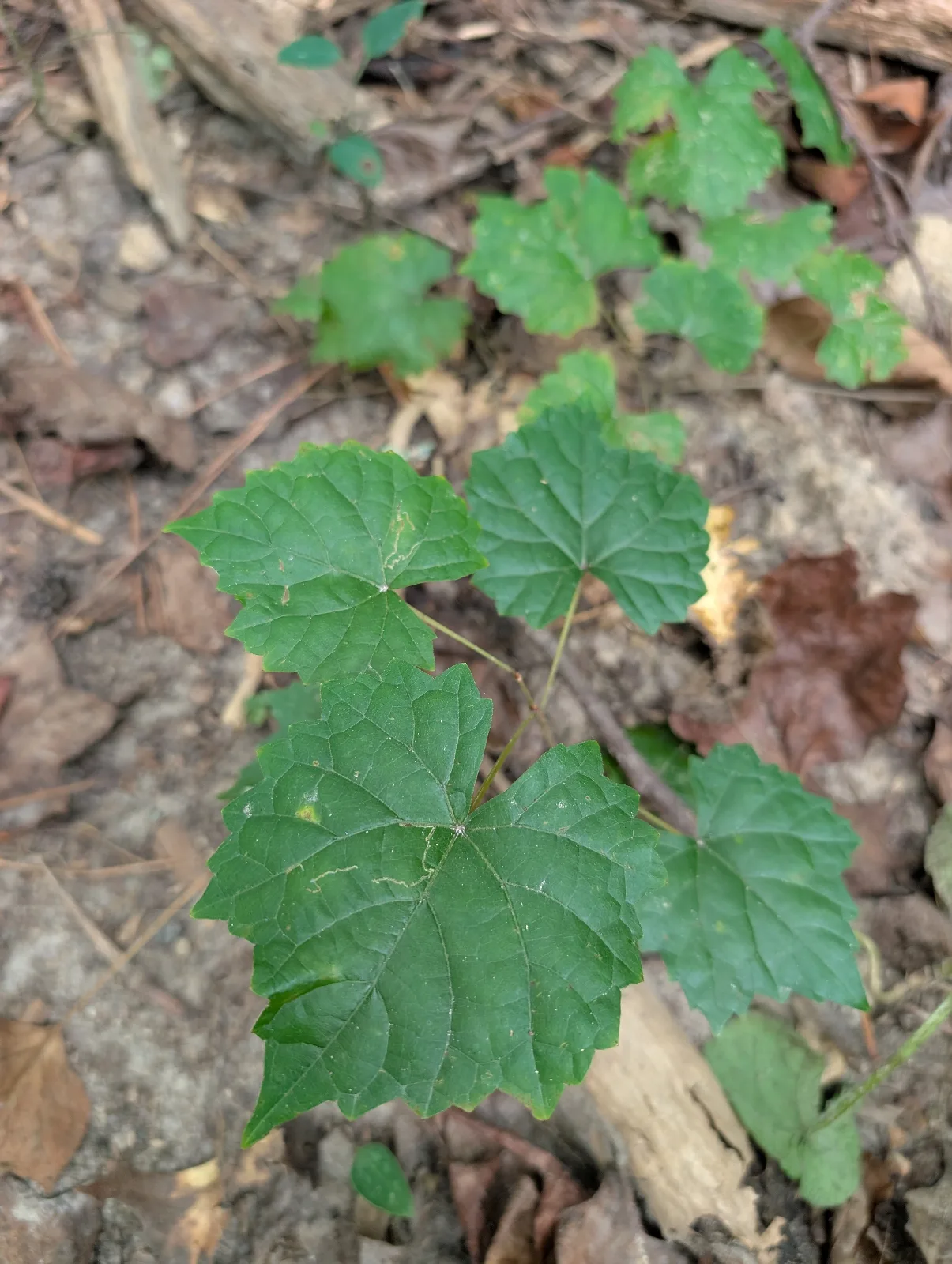
- Blooms
- May to June
- Family
- Vitaceae
Hosts several moth species, including the Nessus sphinx moth (Amphion floridensis) and the Mournful sphinx moth (Enyo lugubris).
Attracts bees, pollinators, small mammals, and songbirds and is a natural addition to pollinator, native and edible gardens.
The muscadine grape is a woody, deciduous, climbing vine native to the southern United States. In nature, it is typically found in dry upland forests with especially sandy or rocky soil, swamps, roadsides and thickets. A member of the grape family (Vitaceae), the muscadine differs from other grape species in that its tendrils are simple, while other native species have forked tendrils. It is the most common and familiar wild grape.
The muscadine grape prefers full sun to partial shade and will grow in most types of soil as long as it is well-drained. The height and width of the vine varies due to the amount of support that the vine receives. This plant is dioecious, meaning that both male and female plants are needed for the female plant to produce fruit. However, there are cultivars that are perfect flowered (having both male and female flower parts) and can produce fruit on their own. (From the North Carolina Exension)
Learn more
- Muscadine on iNaturalist ↗ (opens in a new tab) · photos and range maps
- Muscadine on USDA PLANTS ↗ (opens in a new tab) · the federal plant profile